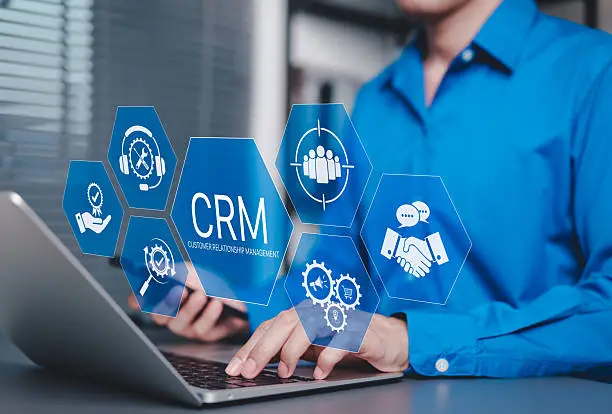
Somewhere in your business right now, a follow-up has slipped through the cracks. A prospect who asked for a proposal three weeks ago has not heard back. A client who was ready to renew got distracted and signed with a competitor. These are not productivity problems. They are systems problems. And CRM software for small business exists specifically to solve them.
The global CRM market has surpassed $57 billion in 2026, and the options available to small businesses have never been better. The challenge is not finding a CRM. It is finding the right one for a team of 3 to 50 people who need something that works immediately without a six-month implementation project, a dedicated admin, or an enterprise budget.
About 30% of B2B contact data decays every year. People change jobs, companies rebrand, and emails bounce. A spreadsheet does not tell you any of that. It just sits there, quietly losing you deals. This guide gives you an honest comparison of the 10 best CRM software for small business options in 2026, a framework for choosing the right one for your specific situation, and the workflows that generate the highest ROI once your CRM is configured correctly.
Why Small Businesses Need CRM Software in 2026
The case for investing in CRM software for small business has never been clearer. Research consistently shows that CRM adoption delivers an average ROI of $8.71 for every $1 invested. Sales teams using CRM software close 29% more deals. And companies with a properly configured CRM reduce their average sales cycle length by up to 14%.
For small businesses specifically, the value of CRM software for small business goes beyond pipeline management. A CRM gives you visibility into which marketing channels generate your best customers, which sales activities drive the most revenue, and which clients are most likely to churn before they actually do. This visibility is what allows small businesses to compete with larger competitors who have bigger teams and bigger budgets.
According to research by Prospeo, the right CRM for a small business is not the one with the most features. It is the one your team will actually use. A complex enterprise platform that requires weeks of training and constant admin overhead will be abandoned within months regardless of its feature set. The best CRM software for small business is the one that fits your current workflow, solves your most painful problem, and can grow with you as your business scales.
The 10 Best CRM Software for Small Business in 2026
1. HubSpot CRM: Best Free CRM Software for Small Business Starting Point
HubSpot CRM is the most widely recommended starting point for CRM software for small business because its free tier is genuinely functional for early-stage teams. Unlike many "free" CRMs that lock all useful features behind paid tiers, HubSpot's free plan includes contact management for unlimited contacts, a visual pipeline with deal tracking, email integration with Gmail and Outlook, basic reporting, meeting scheduling, and live chat.
According to Software Guides, no other CRM matches HubSpot's combination of free-tier generosity, usability, and scalability from startup to enterprise. The platform grows with your business, allowing you to start free and add paid Marketing Hub, Sales Hub, or Service Hub modules as your needs expand without switching platforms.
- Best for: Small businesses getting started with CRM that want a free, scalable foundation they can grow into over time
- Standout features: Free unlimited contacts, visual pipeline, email integration, meeting scheduler, live chat, basic reporting
- Pricing: Free tier available for up to 5 users, Sales Hub Starter at $15/user/month, Professional at $90/user/month
- Honest limitation: Advanced automation, sequences, and AI features require paid tiers that escalate quickly as your team and contact list grow
Pro Tip: HubSpot's free CRM is a foundation, not a destination. Start there to validate your sales process and identify which paid features would actually move your needle before committing to a paid plan. Many small businesses run effectively on the free tier for 12 to 18 months before upgrading.
2. Zoho CRM: Best Value CRM Software for Small Business
Zoho CRM is consistently ranked as the best overall value in CRM software for small business for teams that need enterprise-grade features at a fraction of competitor pricing. At $14 to $52 per user per month, Zoho delivers AI predictions, workflow automation, multi-channel communication, and customizable modules that rival Salesforce's capabilities at a fraction of the cost.
The Zoho ecosystem advantage is significant for small businesses that want to consolidate their tech stack. Native integration with Zoho Books for accounting, Zoho Desk for customer support, Zoho Campaigns for email marketing, and 50 or more other Zoho apps creates a unified business suite that eliminates the integration complexity of combining multiple third-party tools.
- Best for: Small businesses that want the most features per dollar and are willing to invest time in initial configuration
- Standout features: AI predictions with Zia, workflow automation, Canvas customization, native Zoho ecosystem integration, multi-channel communication
- Pricing: Free for up to 3 users, Standard at $14/user/month, Professional at $23/user/month, Enterprise at $40/user/month
- Honest limitation: The interface is less intuitive than HubSpot and requires more setup time to configure effectively for your specific workflow
3. Pipedrive: Best Sales-Focused CRM Software for Small Business
Pipedrive is the preferred CRM software for small business for teams whose primary focus is sales pipeline management rather than broader marketing and customer success workflows. Its visual, drag-and-drop pipeline interface is the most intuitive deal management experience available, making it the natural choice for sales-driven small businesses that want minimal admin overhead and maximum pipeline clarity.
Pipedrive's design philosophy is that salespeople should spend time selling, not updating CRM records. Its activity-based selling model prompts reps with the specific next action required on each deal rather than leaving pipeline management to individual judgment. This structure reduces deals falling through the cracks and keeps every opportunity moving forward consistently.
- Best for: Sales-driven small businesses that want the clearest, most intuitive pipeline management experience available
- Standout features: Visual drag-and-drop pipeline, activity-based selling prompts, email integration with tracking, AI sales assistant, revenue forecasting
- Pricing: Essential at $14/user/month, Advanced at $29/user/month, Professional at $59/user/month
- Honest limitation: Marketing automation capabilities are more limited than HubSpot or ActiveCampaign, making it less suitable for businesses where marketing and sales need to be tightly integrated
4. Less Annoying CRM: Best Simple CRM Software for Small Business
Less Annoying CRM lives up to its name. For small businesses that have tried larger CRM platforms and found them overwhelming, complex, or full of features they will never use, Less Annoying CRM offers the simplest, most focused CRM software for small business experience available at any price point.
At $15 per user per month with no upsells, no feature tiers, and no annual contract requirement, Less Annoying CRM includes contact management, pipeline tracking, calendar integration, task management, and basic reporting. Nothing more. For a small business owner who needs a CRM that works out of the box in under an hour without any training or dedicated admin time, this is the most practical choice in the market.
- Best for: Solo operators and very small teams who want a CRM that is immediately usable without any training or configuration overhead
- Standout features: Zero learning curve, all features included at one price, excellent customer support, no upsells or feature tiers
- Pricing: Flat $15/user/month with no annual commitment required and all features included
- Honest limitation: Lacks the automation depth, marketing integration, and scalability needed by businesses growing beyond 20 to 30 users
5. Salesforce Starter: Best Scalable CRM Software for Growing Small Business
Salesforce Starter is the entry point into the world's most powerful CRM ecosystem for small businesses that are growing rapidly and want CRM software for small business that will never need to be replaced as they scale. At $25 per user per month, Salesforce Starter includes sales, service, and marketing features in a single simplified interface designed specifically for small business teams.
The primary reason to choose Salesforce over simpler alternatives is future-proofing. No other CRM platform offers the depth of customization, integration options, third-party app ecosystem, and enterprise-grade capabilities that Salesforce provides. Starting on Salesforce Starter means your team learns a platform they will never outgrow rather than migrating to a new system every few years as the business expands.
- Best for: Small businesses growing quickly that want CRM infrastructure they will never need to replace as they scale to mid-market and enterprise
- Standout features: Salesforce ecosystem depth, Einstein AI, AppExchange integrations, industry-leading reporting and customization
- Pricing: Starter Suite at $25/user/month, Pro Suite at $100/user/month
- Honest limitation: Even the Starter tier has a steeper learning curve than HubSpot, Pipedrive, or Less Annoying CRM and benefits from dedicated admin resources
6. Monday CRM: Best Visual CRM Software for Small Business Teams
Monday CRM is the best choice for small businesses that want CRM software for small business with the visual flexibility of a project management platform combined with sales pipeline functionality. Teams that already use Monday.com for project management will find the transition to Monday CRM natural, and the tight integration between sales pipeline and project delivery makes it uniquely valuable for service businesses where deals and projects overlap.
Monday CRM's highly customizable board views, automation recipes, and collaboration features make it particularly effective for small businesses where the same team members handle both sales and delivery. The ability to transition a won deal directly into a project board without switching platforms eliminates the handoff friction that causes client experience issues at many small service firms.
- Best for: Small service businesses that want tight integration between sales pipeline management and project delivery workflows
- Standout features: Highly visual and customizable boards, automation recipes, tight project management integration, strong team collaboration features
- Pricing: Basic at $12/seat/month, Standard at $17/seat/month, Pro at $28/seat/month
- Honest limitation: Less depth in pure CRM functionality like lead scoring and revenue attribution compared to dedicated CRM platforms
7. Freshsales: Best AI-Powered CRM Software for Small Business
Freshsales is the most AI-forward CRM software for small business option in 2026 for teams that want intelligent automation without enterprise pricing. Its Freddy AI assistant provides contact scoring, deal health predictions, activity suggestions, and automated data enrichment that reduce manual CRM maintenance significantly for small sales teams.
Freshsales combines CRM, built-in phone and email, chat, and AI automation in a single platform at a price point accessible to small businesses. The built-in communication tools eliminate the need for separate calling and email tracking subscriptions, reducing total cost of ownership compared to assembling similar capabilities from multiple tools.
- Best for: Small businesses that want AI-powered lead scoring, deal predictions, and activity automation without enterprise pricing
- Standout features: Freddy AI contact scoring and deal predictions, built-in phone and email, automated data enrichment, visual pipeline
- Pricing: Free plan available, Growth at $9/user/month, Pro at $39/user/month, Enterprise at $59/user/month
- Honest limitation: The Freshworks ecosystem is less mature than HubSpot or Salesforce, and some advanced automation features require higher-tier plans
8. Streak: Best CRM Software for Small Business Teams Using Gmail
Streak is a unique CRM software for small business that lives entirely inside Gmail, making it the most frictionless adoption path for small businesses whose primary communication channel is email. Instead of requiring your team to log into a separate platform, Streak surfaces pipeline management, contact history, and deal tracking directly within the Gmail interface your team already uses all day.
For small businesses where the biggest CRM adoption barrier is getting the team to consistently update records in a separate tool, Streak eliminates that barrier entirely. Every email thread automatically links to the corresponding contact and deal record, reducing manual data entry to near zero for email-driven sales processes.
- Best for: Small businesses that live in Gmail and want CRM functionality without leaving their email interface
- Standout features: Fully Gmail-native interface, automatic email thread tracking, pipeline management within Gmail, email tracking and mail merge
- Pricing: Free for individual use, Solo at $15/month, Pro at $49/user/month
- Honest limitation: Only works for Gmail users, making it unsuitable for businesses using Outlook or other email platforms
9. Copper: Best CRM Software for Small Business Google Workspace Teams
Copper is the only CRM software for small business built specifically for Google Workspace, making it the natural choice for small businesses already running their operations on Gmail, Google Calendar, Google Drive, and Google Meet. Unlike Streak which adds CRM functionality inside Gmail, Copper is a full-featured CRM that integrates deeply with the entire Google Workspace ecosystem.
Copper automatically captures contact details from Gmail, logs meetings from Google Calendar, attaches relevant Drive files to contact records, and surfaces relationship context inside every Google Workspace application. For businesses where Google is the operating system, this eliminates the manual data entry that makes CRM adoption so challenging for small teams with limited administrative bandwidth.
- Best for: Small businesses running their entire operation on Google Workspace that want a CRM built specifically for that ecosystem
- Standout features: Deep Google Workspace integration, automatic Gmail data capture, Google Calendar meeting logging, Drive file association
- Pricing: Starter at $9/user/month, Basic at $23/user/month, Professional at $59/user/month
- Honest limitation: Not suitable for businesses using Microsoft 365 or mixed email environments, and marketing automation capabilities are limited
10. ActiveCampaign CRM: Best CRM Software for Small Business Email-First Teams
ActiveCampaign CRM is the best choice for small businesses where email marketing and sales automation need to be deeply integrated in a single platform. While primarily known as an email marketing and automation tool, ActiveCampaign includes a fully featured CRM with deal pipeline management, contact scoring, and sales automation that rivals dedicated CRM platforms in depth.
The primary advantage of ActiveCampaign CRM over dedicated CRM platforms is the seamless connection between marketing automation and sales activity. When a contact's behavior in an email campaign triggers a deal creation or a sales task assignment, the workflow happens automatically within a single platform rather than requiring a third-party integration. For a complete guide on building email and CRM automation workflows, read our article on CRM Automation for Software Development.
- Best for: Small businesses where email marketing and CRM need to be tightly integrated without separate platform management
- Standout features: Deep email-CRM integration, visual automation builder, lead scoring, deal pipeline management, behavioral triggers
- Pricing: Starts at $15/month for 1,000 contacts including CRM, scales with contact count and feature tier
- Honest limitation: The CRM component is less visually intuitive than Pipedrive and less feature-rich than HubSpot for pure sales pipeline management
How to Choose the Right CRM Software for Your Small Business
The Five Questions to Ask Before Choosing
Selecting the right CRM software for small business requires answering five questions before evaluating any specific platform. What is your primary use case: sales pipeline management, marketing automation, customer support, or all three? How technical is your team and how much setup time can you invest? What is your budget per user per month? Which tools does your CRM need to integrate with? And how fast is your business growing and how important is it that the platform scales with you?
Your answers to these questions will narrow the field significantly. A solo operator who needs something working in an hour should evaluate Less Annoying CRM or HubSpot Free. A 10-person sales team with an active outreach motion should evaluate Pipedrive or HubSpot Sales Hub. A business growing rapidly toward mid-market should evaluate Salesforce Starter. A Google Workspace team should evaluate Copper or Streak.
The Most Important CRM Feature Most Small Businesses Overlook
The most important feature in any CRM software for small business is not AI, not automation, and not reporting. It is adoption. A CRM that your team actually uses every day produces infinitely better results than a feature-rich platform that gets abandoned after the first month because it requires too much manual effort to maintain.
Before committing to any platform, run a 14-day free trial with the actual people who will use it daily. If your sales rep finds it confusing, your marketing manager finds it slow, or your operations lead finds it inflexible, the best features in the world will not save the implementation. Choose the platform your team will use consistently, then optimize from there.
The Most Impactful CRM Workflows to Build First in Your Small Business
Once you have selected your CRM software for small business, the workflows you build in the first 30 days determine whether the investment generates measurable ROI. Start with these three before building anything more complex.
The lead capture and routing workflow ensures every new lead automatically enters your CRM from every source including your website form, LinkedIn, email, and any other channel where prospects reach out. Leads that require manual entry are the ones most likely to be forgotten. Automation eliminates that risk from day one. For a complete guide on lead capture automation, read our article on Lead Generation Strategies for B2B.
The follow-up sequence workflow ensures that every new lead receives a timely, consistent follow-up regardless of how busy your team is when the lead arrives. An automated sequence of 3 to 5 touchpoints over 10 to 14 days converts a significantly higher percentage of leads than a single follow-up or no follow-up at all.
The pipeline stage automation workflow moves deals through your pipeline stages automatically based on actions taken, sends reminders when deals have been idle for too long, and alerts the appropriate team member when a deal requires attention. This visibility prevents the most common small business sales failure: deals going cold because no one noticed they needed attention.
Common Mistakes When Implementing CRM Software for Small Business
Mistake 1: Choosing the Most Feature-Rich Platform Instead of the Most Adoptable One
The most common CRM software for small business implementation failure is choosing a platform based on its feature list rather than its fit for your team's actual workflow. Enterprise platforms like Salesforce and Marketo have extraordinary capabilities, but they require dedicated admin resources that most small businesses do not have. Start with a platform your team can adopt within a week, not one that requires a three-month implementation project.
Mistake 2: Migrating Bad Data Into the New CRM
Many small businesses migrate years of spreadsheet data into their new CRM software for small business without cleaning it first. The result is a CRM full of duplicate records, outdated email addresses, and missing information that makes automation unreliable and reporting meaningless. Invest one week in data cleaning before migration and your CRM will perform significantly better from launch day.
Mistake 3: Buying a CRM and Not Configuring It for Your Specific Sales Process
The default pipeline stages in most CRM software for small business platforms do not match the actual stages of your specific sales process. A CRM configured for a generic sales funnel produces generic results. Customize your pipeline stages, required fields, and automation triggers to reflect exactly how your team actually sells before going live.
Frequently Asked Questions About CRM Software for Small Business
What is the best CRM software for small business in 2026?
The best CRM software for small business depends on your specific situation. HubSpot offers the best free starting point with room to scale. Zoho delivers the most features per dollar for budget-conscious teams. Pipedrive provides the most intuitive sales pipeline experience. Less Annoying CRM is the simplest option for teams that want zero learning curve. Salesforce Starter is the best choice for businesses growing rapidly toward mid-market. There is no single best CRM for every small business, only the best CRM for your specific team size, budget, technical resources, and primary use case.
How much does CRM software for small business cost?
CRM software for small business ranges from completely free to $100 or more per user per month. Free options include HubSpot CRM free tier and Zoho CRM free plan for up to 3 users. Entry-level paid plans from Pipedrive, Zoho, and Less Annoying CRM start at $14 to $15 per user per month. Mid-tier plans with automation and deeper reporting typically cost $25 to $60 per user per month. Most small businesses of 5 to 10 people can build an effective CRM infrastructure for $75 to $300 per month total.
Does a small business really need CRM software?
Any small business managing more than 20 to 30 active prospects or customer relationships simultaneously will benefit significantly from CRM software for small business. Below that threshold, a well-maintained spreadsheet may be sufficient. Above it, the complexity of tracking follow-up timing, deal stage, communication history, and relationship context across multiple contacts makes manual management increasingly unreliable. The cost of a missed follow-up or a lost deal from poor pipeline visibility almost always exceeds the cost of a CRM subscription within the first month.
What features should small business CRM software have?
The essential features for CRM software for small business are contact and company management, visual pipeline with deal tracking, email integration for automatic communication logging, task and activity management, basic reporting on pipeline and revenue, and mobile access for field teams. Beyond these essentials, email automation sequences, lead scoring, and marketing automation integration add significant value for businesses with active outbound or inbound lead generation programs.
How long does it take to implement CRM software for small business?
A basic CRM software for small business implementation covering contact import, pipeline configuration, and email integration can typically be completed in 1 to 5 days for platforms like HubSpot, Pipedrive, or Less Annoying CRM. More complex implementations involving data migration from legacy systems, custom field configuration, and automation workflow setup typically take 2 to 4 weeks. The fastest path to CRM value is to start simple, use the platform for 30 days before adding complexity, and build automation gradually as your team becomes comfortable with the core functionality.
Sources and References
- Prospeo Best CRM Software for Small Businesses 2026
- Sybill Best CRM Software for Small Business 2026
- Software Guides Best CRM Software 2026
- Business News Daily Best CRM Platforms for Small Business 2026
- HubSpot State of Marketing 2024
- Salesforce State of Marketing Report 2024
Conclusion: The Best CRM Software for Small Business Is the One Your Team Actually Uses
The CRM software for small business market in 2026 offers genuinely excellent options at every price point from completely free to enterprise-grade. The choice that matters is not which platform has the longest feature list. It is which platform your team will adopt consistently, configure correctly for your sales process, and use as the operational foundation of your pipeline management every single day.
Start with a free trial of two or three platforms that match your use case. Get your actual sales team to test each one for a week. Choose the platform they find most natural to use. Configure it for your specific pipeline stages and workflow before going live. Build your three most important automations in the first 30 days. And measure success on pipeline visibility, follow-up consistency, and closed revenue rather than on how many features you are using.
The right CRM software for small business pays for itself within the first quarter. The wrong one gets abandoned within the first six months. Take the time to choose correctly and your CRM will become the most valuable operational investment your small business makes in 2026.