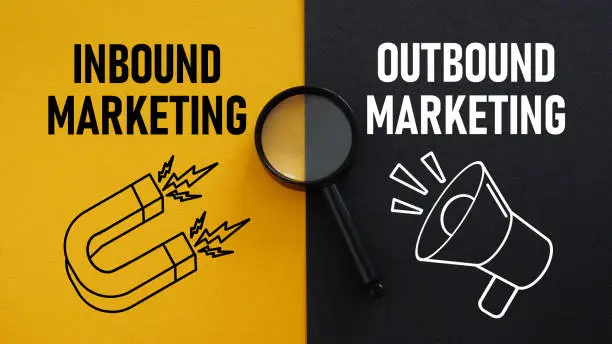
Inbound marketing for tech companies has never been more valuable or more challenging than it is in 2026. Valuable because inbound leads cost 39% less than outbound leads, inbound tactics generate 54% more leads than paid marketing, and 75% of inbound marketing teams say their strategy works. Challenging because the competition for buyer attention in the technology space has never been higher, AI-generated content has flooded every channel with noise, and tech buyers have become significantly more sophisticated and skeptical in their evaluation processes.
The tech companies winning with inbound marketing for tech companies in 2026 are not those publishing the most content or running the most campaigns. They are those building the most useful, most specific, and most authoritative inbound systems that attract exactly the right buyers at exactly the right moment in their evaluation journey. This guide gives you 11 powerful strategies to build that system.
Whether you run a SaaS company, a technology services firm, a software agency, or an IT solutions provider, these strategies are built on current 2026 data and designed for the specific dynamics of selling technology to technical and business buyers who conduct extensive self-directed research before engaging any vendor.
Why Inbound Marketing for Tech Companies Works Better Than Outbound in 2026
The business case for investing in inbound marketing for tech companies is stronger than ever. According to research compiled by EntrepreneursHQ, inbound leads cost 61% less than outbound leads, inbound marketing costs $14 less per new customer than traditional marketing, and 90% of startups rely on SEO and content marketing for brand awareness. For technology companies specifically, where buyers conduct extensive independent research before contacting vendors, inbound is not just more cost-effective than outbound. It is more aligned with how buyers actually make purchasing decisions.
Tech buyers complete 60 to 70% of their research before talking to any vendor. They read technical documentation, watch product walkthroughs, compare alternatives on G2 and Capterra, consult peers in Slack communities, and build their shortlist long before submitting a contact form. A tech company with no inbound presence is simply not on the shortlist when that buyer is ready to evaluate. A tech company with strong inbound marketing for tech companies across every channel those buyers use is already the most familiar and trusted option before the first sales conversation begins.
11 Powerful Inbound Marketing Strategies for Tech Companies in 2026
1. Build a Technical Content Engine That Attracts Your Ideal Tech Buyers
Content marketing is the foundation of every successful inbound marketing for tech companies program. But the content that attracts and converts technology buyers is fundamentally different from the content that works for other B2B industries. Tech buyers are more analytical, more skeptical of marketing claims, and more likely to evaluate the quality of your content as a signal of the quality of your product or service.
The content that performs best for tech companies is highly specific, technically accurate, and genuinely useful for solving real problems. Tutorial-style technical guides that help developers solve specific implementation challenges, benchmark studies that compare performance across competing approaches, and architecture decision guides that help technical leaders choose between technology options attract exactly the high-value technical buyers that most tech companies need in their pipeline. For a complete content strategy framework, read our guide on Content Marketing Strategy for B2B.
- Create technical tutorial content that solves specific implementation problems your ICP encounters when working with technologies adjacent to your product
- Publish benchmark studies and performance comparisons that demonstrate your product's advantages with reproducible data rather than marketing claims
- Write architecture decision guides that help technical decision-makers evaluate the trade-offs between different technology approaches
- Develop integration guides for every major tool and platform your buyers already use to capture search traffic from buyers evaluating compatibility
Pro Tip: The highest-converting content for tech companies in 2026 answers the exact questions technical buyers type into Google, ChatGPT, and Stack Overflow during their evaluation process. Build a content calendar around those questions rather than around your product features and your inbound traffic will be significantly more qualified.
2. Optimize Your Tech Company Website for AI Search and Traditional SEO
SEO is the traffic engine that powers every other component of inbound marketing for tech companies. Without ranking visibility in search results, every piece of content you create reaches only your existing audience rather than the new buyers you need to attract. In 2026, SEO for tech companies means optimizing simultaneously for traditional Google search, Google AI Overviews, and AI answer engines like ChatGPT and Perplexity that are increasingly the first stop for tech buyers researching their options.
AI answer engines favor content that is clearly structured, specifically authoritative, and directly answers the question being asked. This means your technical content should include explicit definitions, direct answers to common questions, structured FAQ sections, and data-backed claims from credible sources. According to EntrepreneursHQ, 90% of startups rely on SEO and content marketing for brand awareness, making it the most widely adopted channel in tech company inbound programs.
- Target technical long-tail keywords that your ICP uses during active evaluation such as "how to integrate X with Y" or "best alternative to Z for enterprise"
- Structure your content with clear H2 and H3 headings, direct answer paragraphs, and FAQ sections that AI search engines can easily extract and surface
- Build topic clusters around your core product categories with pillar pages linking to supporting technical content for maximum topical authority
- Optimize your developer documentation for search since documentation pages often rank highly for technical queries and attract developers who influence purchase decisions
3. Use LinkedIn Thought Leadership to Reach Tech Decision-Makers
LinkedIn is the most important social channel in any inbound marketing for tech companies program targeting business and technical decision-makers. CTOs, VPs of Engineering, IT Directors, and technology procurement leaders are active on LinkedIn daily, and the platform's professional context makes them more receptive to technology content than on any consumer social platform.
The LinkedIn approach that generates the most inbound pipeline for tech companies in 2026 is founder and executive thought leadership that publishes specific, honest, technically credible perspectives on the challenges and trade-offs in your domain. A CTO who consistently shares thoughtful insights on architecture decisions, security trade-offs, or infrastructure optimization builds an audience of exactly the technical and business buyers most likely to evaluate their company's product. For a complete LinkedIn marketing guide, read our article on LinkedIn Marketing for B2B Companies.
- Publish 3 to 5 times per week from founder or CTO profiles with specific, technical insights that demonstrate genuine domain expertise
- Share honest opinions on technology trends, common implementation mistakes, and trade-offs that your ICP navigates daily
- Engage genuinely in the comments of posts from your target buyers and community influencers to build visibility before any direct outreach
- Use LinkedIn newsletters to build a subscriber base of tech decision-makers who receive your content directly without depending on the feed algorithm
4. Build a Developer-Focused Inbound Program If Your Product Has a Technical User
For tech companies whose products are used or evaluated by developers, a developer-focused inbound strategy is one of the highest-ROI components of any inbound marketing for tech companies program. Developers are uniquely influential in technology purchasing decisions because they evaluate the technical quality of a product and their endorsement carries enormous weight with the business decision-makers who approve purchases.
Developer-focused inbound marketing works through channels that developers actually use: technical documentation, open source contributions, developer community presence, GitHub activity, Stack Overflow answers, and technical blog posts that solve real coding problems. Each of these channels builds the developer trust that eventually converts into enterprise pipeline when those developers advocate for your product to their managers and technical leaders.
- Invest in best-in-class developer documentation that makes your product easy to evaluate and implement without sales assistance
- Publish technical blog posts on your engineering blog that demonstrate how your team solves complex problems and builds quality software
- Contribute to open source projects adjacent to your product category to build community trust and awareness among technical evaluators
- Answer relevant questions on Stack Overflow, Hacker News, and technical Slack communities with genuinely helpful responses that do not feel promotional
5. Create Lead Magnets That Convert Tech Buyers Into Identifiable Leads
Lead magnets are the mechanism that converts anonymous website traffic into identifiable pipeline in any inbound marketing for tech companies program. The challenge for tech companies is that technical buyers have a high tolerance for free information and a low tolerance for content they perceive as thin, promotional, or not worth their contact details.
The lead magnets that convert tech buyers in 2026 are tools and calculators that solve a specific problem interactively, technical frameworks and decision matrices that help buyers evaluate options, detailed benchmark reports that provide original data not available elsewhere, and implementation templates that save significant time on common technical tasks. Each of these provides enough genuine value that a technical buyer will willingly provide their contact details to access it.
- Build a free calculator or assessment tool that helps your ICP quantify the cost of their current approach or the potential ROI of switching to yours
- Create a technical decision framework or evaluation matrix that helps buyers compare options in your product category objectively
- Publish an original benchmark report based on data from your product or customer base that provides insights not available in any competitor's content
- Develop implementation templates, code snippets, or configuration guides that save technical buyers hours of work and are worth their contact information to access
6. Use Free Tools and Freemium Tiers as Inbound Marketing for Tech Companies
For tech companies, the product itself can be one of the most powerful channels in an inbound marketing for tech companies strategy. Free tools, freemium product tiers, and open source versions of your product create inbound discovery through product usage rather than content consumption. Buyers who experience your product's value firsthand before any sales conversation are significantly more likely to convert and significantly less likely to churn.
Companies like HubSpot, Ahrefs, Semrush, and Cloudflare have all built substantial portions of their growth on free tools that attract their target buyers organically. The free tool does not need to be your full product. It can be a standalone utility that solves one specific problem your ICP encounters regularly, creating awareness and trust through usefulness rather than marketing. For a complete product-led growth framework, read our guide on Sales Funnel for SaaS Companies.
- Identify one specific problem your ICP faces regularly that you can solve with a free standalone tool that demonstrates your technical capability
- Build the free tool to be genuinely best-in-class for its specific use case so it earns organic sharing and backlinks from the technical community
- Design the free experience to naturally surface the need for your paid product without feeling like a bait-and-switch
- Promote your free tool through developer communities, Product Hunt, and technical subreddits to maximize initial distribution and organic discovery
7. Build a Review and Social Proof Program on Tech Marketplaces
For tech companies, software review platforms like G2, Capterra, and Trustpilot are inbound channels in their own right. Buyers who discover your product through category searches on G2 are already in active evaluation mode with high purchase intent. Strong review profiles on these platforms generate inbound pipeline that costs nothing per lead once your review volume reaches competitive threshold levels.
This is an often-overlooked component of inbound marketing for tech companies. Review platforms now surface in AI-generated answers, Google search results, and buyer research phases simultaneously. A tech company with 200 verified G2 reviews and a 4.7 star rating reaches buyers across multiple discovery channels without additional spend for each impression.
- Build a systematic review generation program that asks satisfied customers to leave reviews on G2, Capterra, and other relevant platforms at moments of high satisfaction
- Respond to every review publicly, both positive and negative, to demonstrate product commitment and responsiveness to customer feedback
- Optimize your G2 and Capterra profiles with detailed feature descriptions, use case documentation, and comparison information that helps buyers evaluate fit
- Apply for G2 category leader and high performer badges which significantly increase profile visibility and click-through rates from category search pages
8. Run Webinars and Virtual Events as Core Inbound Channels for Tech Companies
Webinars are one of the highest-converting inbound channels in any inbound marketing for tech companies program because they attract self-selected buyers who are actively interested in your topic. For tech companies, the webinar formats that generate the best-qualified leads are live technical deep dives that demonstrate product capabilities in real use cases, expert panel discussions on emerging technology trends, and hands-on workshops that teach attendees something genuinely valuable.
In 2026, tech buyers are more selective about webinars than ever before. Generic product demos that masquerade as educational content generate low registration and high dropout rates. Technical workshops and expert panels that deliver real learning generate strong registration, high attendance, and warm follow-up conversations that convert into pipeline far more efficiently than cold outreach.
- Host monthly technical workshops that teach your ICP how to solve a specific problem, whether or not that solution involves your product directly
- Partner with complementary technology vendors on joint webinars that double your audience reach with a single event investment
- Record every webinar and repurpose it into short clips, blog posts, and email content to extend the lead generation value of each event
- Follow up with all attendees within 24 hours with a personalized message referencing something specific from the session and a relevant next step
9. Use Email Marketing to Nurture Tech Buyers Through Long Evaluation Cycles
Technology purchasing decisions involve long evaluation cycles, multiple stakeholders, and extensive competitive comparison. Email nurture is the inbound channel that keeps your company visible and credible throughout that entire process, ensuring that when a buyer is ready to make a decision, you are still on their shortlist. For inbound marketing for tech companies, email nurture bridges the gap between initial interest and purchase-ready intent.
The email nurture content that performs best for tech companies in 2026 is technically specific and directly relevant to the evaluation stage of each recipient. Early-stage nurture delivers educational content about the problem your product solves. Mid-stage nurture delivers product capability demonstrations, case studies, and competitive comparisons. Late-stage nurture delivers ROI documentation, implementation support, and executive business case materials. For a complete email strategy guide, read our article on B2B Email Marketing Strategy.
- Build separate nurture tracks for technical evaluators and business decision-makers since each needs completely different content at every funnel stage
- Use behavioral triggers like product page visits, documentation access, and pricing page views to identify when a nurtured lead's evaluation intent is rising
- Send product update emails to all trial users and leads to maintain visibility during extended evaluation cycles that may span weeks or months
- Include technical proof points like performance benchmarks, security certifications, and integration depth in mid-funnel emails to answer evaluation questions proactively
10. Build a Community Around Your Tech Product or Domain
Community-led growth is one of the most powerful long-term strategies in inbound marketing for tech companies. When you build or sponsor a community around the problem your product solves, or the technology domain you operate in, you create an inbound channel where buyers come to you rather than requiring you to reach them. Community members who receive value from participating become advocates who refer colleagues, defend your product in competitive conversations, and generate word-of-mouth pipeline that your analytics may never fully capture.
The communities that generate the most inbound pipeline for tech companies are those focused on genuine peer value exchange rather than product promotion. A community where your ICP shares implementation challenges, asks technical questions, and discusses emerging trends creates real value independently of your product. Your presence as the community host or sponsor creates trust and authority that naturally converts into product consideration over time.
- Identify whether to build your own community or invest deeply in an existing community your ICP already participates in actively
- Provide consistent, genuinely valuable contributions to your community before ever promoting your product within it
- Host regular community events such as virtual meetups, AMAs with industry experts, and collaborative problem-solving sessions to build engagement and habit
- Track which community members visit your website, start trials, or request demos to measure community's direct contribution to pipeline
11. Measure Inbound Marketing for Tech Companies on Pipeline and Revenue, Not Traffic
The most important strategic decision in any inbound marketing for tech companies program is what you measure. Most tech companies track inbound performance on website traffic, content views, and lead volume. These metrics are useful but insufficient. Traffic without conversion is an expense. Leads without pipeline are a vanity metric. The only measurement framework that tells you whether your inbound investment is working is one that connects inbound activity directly to pipeline generated and revenue closed.
For tech companies specifically, the inbound metrics that matter are organic traffic by keyword intent category, conversion rate from organic traffic to identified lead, lead-to-SQL conversion rate by inbound channel, average sales cycle length for inbound versus outbound leads, and closed revenue attributed to inbound channels by source. These metrics together give you a complete picture of where your inbound program is generating ROI and where it needs improvement.
- Use UTM parameters on every inbound channel link so you can track the full journey from first touch to closed deal in your CRM
- Segment your pipeline reporting by lead source so you can compare inbound channel performance against each other and against outbound
- Track average sales cycle length separately for inbound versus outbound leads since inbound typically produces shorter cycles due to higher initial intent
- Review inbound ROI by channel quarterly and reallocate investment toward the channels producing the highest pipeline quality at the lowest cost per SQL
How to Build Your Inbound Marketing for Tech Companies Roadmap
Building a complete inbound marketing for tech companies program takes time and cannot be done effectively by launching all channels simultaneously. The roadmap that produces the best results for most tech companies starts with the highest-ROI channels and adds complexity systematically as each layer matures.
In the first 90 days, focus exclusively on website optimization and SEO-driven content. Without a converting website and growing organic traffic, every other inbound channel underperforms because there is no destination to send buyers to. Create your first 10 to 15 pieces of high-quality technical content targeting your highest-priority keywords. Optimize your lead capture with at least one compelling lead magnet. Configure your analytics to track the metrics that matter.
In months 4 to 6, add LinkedIn thought leadership and email nurture. These channels amplify your content investment by reaching buyers who may not find you through search and by maintaining visibility with buyers who have already engaged but are not yet ready to purchase. Launch your first webinar or technical workshop series to generate warm leads directly.
In months 7 to 12, build your review program, launch a free tool if your product supports it, and begin community investment. These longer-burning channels create compounding inbound pipeline that accelerates over time as reviews accumulate, free tool users increase, and community membership grows.
Frequently Asked Questions About Inbound Marketing for Tech Companies
What is inbound marketing for tech companies?
Inbound marketing for tech companies is the practice of attracting, engaging, and converting technology buyers through valuable content, SEO, social media, email nurture, and community rather than through paid advertising or cold outreach. It works by creating resources that tech buyers find genuinely useful during their independent research process, building trust and authority before any sales conversation begins. Inbound marketing for tech companies is particularly effective because technology buyers conduct extensive self-directed research and form strong opinions before engaging any vendor.
Why does inbound marketing work especially well for tech companies?
Inbound marketing for tech companies works especially well because technology buyers have above-average research intensity and below-average tolerance for interruptive marketing. Tech buyers actively seek information, consult technical documentation, compare options through structured evaluation, and trust peer recommendations over vendor claims. Inbound strategies that provide genuine technical value align perfectly with how tech buyers actually make decisions, while outbound tactics that interrupt that process are increasingly ignored or actively filtered out.
How long does it take to see results from inbound marketing for tech companies?
Results from inbound marketing for tech companies vary by channel. LinkedIn thought leadership generates engagement within weeks of consistent posting. Email marketing shows results from the first campaign. SEO and content marketing typically take 4 to 12 months to generate meaningful organic traffic. Free tools can generate immediate viral distribution if built correctly and launched through the right channels. A complete inbound program typically shows meaningful pipeline contribution within 6 months and reaches its full compounding potential at 12 to 24 months of consistent execution.
What is the ROI of inbound marketing for tech companies?
Inbound marketing for tech companies delivers an average cost per lead 61% lower than outbound, generates 54% more leads than paid marketing, and costs $14 less per new customer than traditional marketing approaches. These advantages compound over time as organic rankings improve, email lists grow, community membership increases, and review profiles accumulate. Tech companies that invest consistently in inbound for 12 or more months typically achieve a cost of pipeline significantly below their outbound cost, making inbound one of the highest-ROI investments available to technology businesses.
What content works best for inbound marketing in tech companies?
The content types that generate the most pipeline for inbound marketing for tech companies are technical tutorial guides that solve specific implementation problems, benchmark studies that compare performance with original data, architecture decision frameworks that help technical leaders choose between approaches, integration guides for popular adjacent tools, and case studies that demonstrate specific measurable outcomes from real customers in similar industries. Generic technology trend content, product announcement posts, and shallow how-to articles perform significantly worse because they do not match the research depth and specificity that tech buyers expect from credible vendors.
Sources and References
- EntrepreneursHQ 61 Inbound Marketing Statistics 2026
- Clutch Top Inbound Marketing Agencies 2026
- Miniloop Best Inbound Marketing Agencies 2026 Ranked for B2B Teams
- JourneyH Top 10 B2B Tech Marketing Agencies 2026
- HubSpot State of Marketing 2024
- Salesforce State of Marketing Report 2024
Conclusion: Inbound Marketing for Tech Companies Is a Long-Term Compounding Asset
The tech companies building the most durable competitive advantages in 2026 are those investing consistently in inbound marketing for tech companies rather than relying exclusively on outbound prospecting or paid advertising. The content they publish today will generate leads for years. The SEO authority they build this quarter will compound next quarter. The community they cultivate this year will generate referrals and advocacy for decades.
Start with the channels that match your current resources and ICP. Technical content and SEO for long-term organic pipeline. LinkedIn for decision-maker visibility. Email nurture for cycle-length management. Free tools or webinars for direct pipeline generation. Build each channel to consistency before adding complexity, measure every investment against pipeline and revenue rather than vanity metrics, and treat your inbound program as a long-term compounding asset rather than a short-term campaign.
Inbound marketing for tech companies rewards patience, expertise, and consistency above all else. The tech companies that show up every week with genuinely useful content for their target buyers, in the channels those buyers actually use, will build the trust and authority that converts into predictable, scalable inbound pipeline over time.